History of Clos de Vougeot: nine centuries in key dates
The monks: 1098–1551
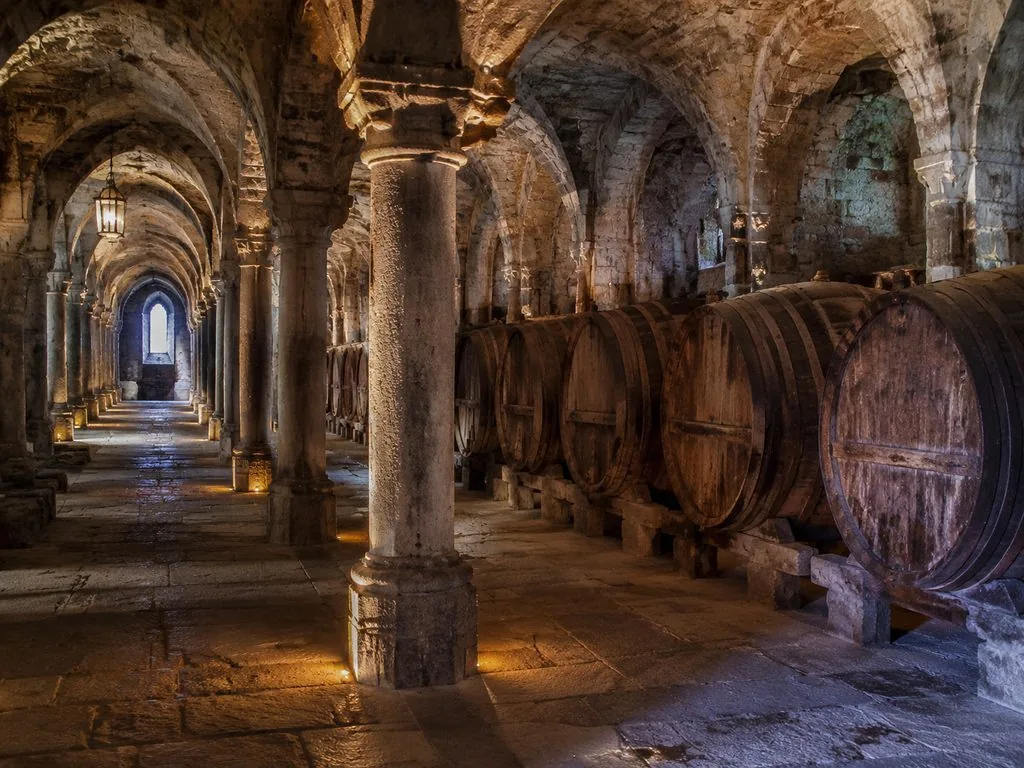
It all began about ten kilometers from here, at Cîteaux Abbey, founded in 1098. Between around 1109 and 1115, the Cistercians gathered plots that had been donated or purchased and enclosed them: this was the clos. In the 12th century, they built the winery, shaped like a cloister, and the vaulted Grand Cellar, which could hold two thousand barrels of wine. Four oak screw presses, each capable of pressing four tons of grapes, occupied the winery. In the 14th century, the oak roof frame of the lay brothers' dormitory was added to the upper floor where the laymen who worked the vineyards slept.
It was these same monks who, plot by plot, noted that the wine from the top of the clos was different from that at the bottom. The word “climat” in Burgundy comes from this work. In 1551, Dom Jean Loisier, the 48th abbot of Cîteaux, had the Renaissance manor built: the courtyard, the kitchens, the well. The building you visit today is this addition placed on top of the medieval agricultural tool, and the marked route passes through both sides.
The break: 1790
On 13 February 1790, the abbey and its thirteen thousand hectares, including the clos, were confiscated as national property. In a single decision, six and a half centuries of single ownership came to an end. This was the starting point for the fragmentation that makes the grand cru unique today: one wall, one name, and dozens of different hands. The rest of this story is on how many owners.
The 19th-century owners
In 1818, the banker Gabriel-Julien Ouvrard bought the château and the estate. In 1889, the wine merchant Léonce Bocquet repurchased the château and fifteen hectares; he restored the building, which was in need of repair, and he was buried there in 1913. It is his first name that the château’s restaurant, La Table de Léonce, bears today — details are on the lunch page.
In 1920, Étienne Camuzet bought the château. A winemaker, deputy of the Côte-d’Or, and mayor of Vosne-Romanée, he kept the walls and sold the fifteen hectares to fifteen owners. This decision, more than any other, explains the clos as it is today.
1934: the Confrérie
The Confrérie des Chevaliers du Tastevin was founded in 1934 in Nuits-Saint-Georges, in the midst of a wine crisis: Burgundy wines were no longer selling, and a small group decided to defend them through celebration and ritual rather than advertising. It now has around twelve thousand active members worldwide, holds its chapters and initiation dinners in the Grand Cellar, and launched the Saint-Vincent tournante, which moves to a different village every late January. The film shown in the Petit Cellier, “Jamais en vain, toujours en vin” (“Never in vain, always in wine”), tells this story better than I can.
1944 and the 99-year lease
In 1944, the Société civile des Amis du Château du Clos de Vougeot repurchased the building and entrusted it to the Confrérie under a 99-year lease. This is the arrangement that still stands today: a company that owns the walls, and a brotherhood that occupies and brings them to life. The château has been listed as a historic monument since 1949 and no longer owns any vineyards; it no longer produces wine. Who owns what exactly? The answer is on an entire page, because the question comes up time and again.
Since 4 July 2015, the château has also housed the headquarters of the association of the Climats of the Burgundy vineyard, inscribed on the UNESCO World Heritage List. In 2019, it hosted the first World Championship of œufs en meurette on 11 October — the monks would no doubt have found this reasonable.
Read the dates in order as you walk: winery and cellar for the monks, courtyard and kitchens for 1551, Grand Cellar for the Confrérie. The building tells its own story if you follow the signs without skipping any steps.
Two stories you’ll be told
Legend has it that, under the Empire, Colonel Bisson had his troops present arms in front of the clos; this is where the expression “saluer le Clos de Vougeot” (“salute the Clos de Vougeot”) comes from. I always tell this story by saying it’s a legend, because it’s too good to be verified. The other anecdote is from the court: Louis XIV had been prescribed Burgundy wines, those from Nuits, by his physician Fagon. A royal prescription, nothing more, but it greatly benefited trade.
Nine centuries, and one wine
The history of the building and that of the appellation parted ways in 1790 and have never reunited. The clos itself became a grand cru in 1937 and covers about fifty hectares in a single block. This is the subject of the page dedicated to the wine, and if you want to see the plots from the vineyards, the options are on all tours.
Enter and dine in the setting
The tasting lunch at La Table de Léonce includes a guided tour of the château and a four-course Burgundian meal, with four wines selected by the Confrérie and commentary from the sommelier on the UNESCO-listed Climats.
Frequently asked questions
Who built Clos de Vougeot?
The Cistercian monks of Cîteaux Abbey, founded in 1098: they established the clos around 1109–1115 and built the winery and the Grand Cellar in the 12th century. The Renaissance manor dates from 1551.
What happened during the Revolution?
On 13 February 1790, the abbey and its thirteen thousand hectares, including the clos, were confiscated as national property. This marked the beginning of the fragmentation: see how many owners.
What is the Confrérie des Chevaliers du Tastevin?
A brotherhood founded in 1934 in Nuits-Saint-Georges during the wine crisis, with around twelve thousand active members worldwide. It has occupied the château since 1944 under a 99-year lease: see who owns it.
Does the château still produce wine?
No. It no longer owns any vineyards following sales in the 20th century. The plots of the clos belong to more than eighty owners: see Clos de Vougeot wine.